
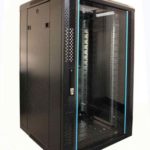
 FREE STANDING CABINETS
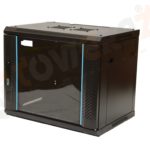 WALL MOUNTED CABINETS
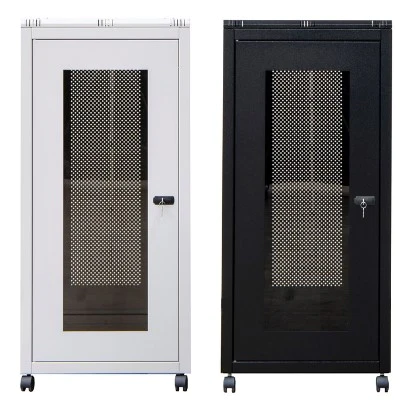
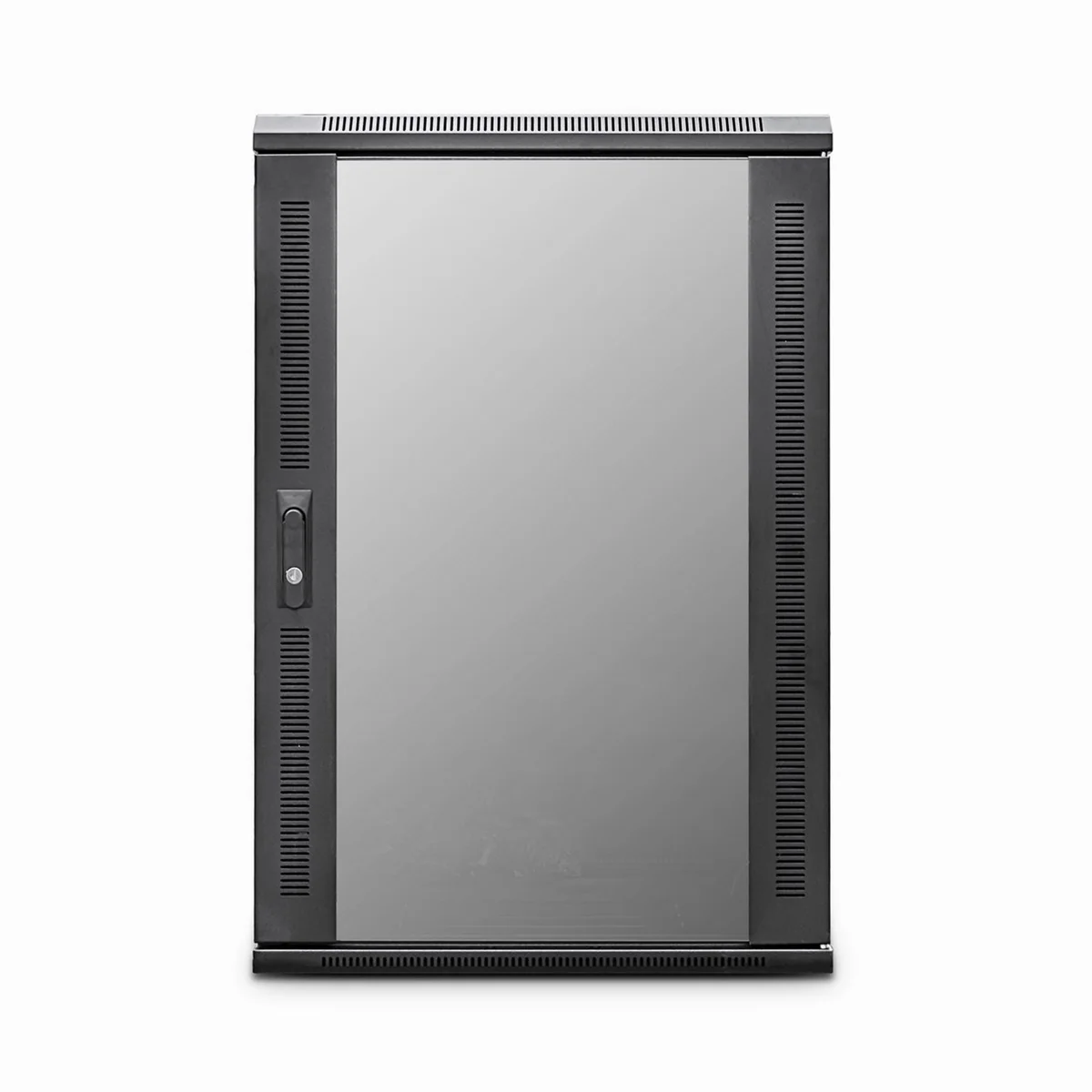
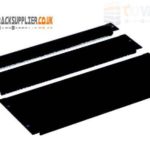 Blanking panel
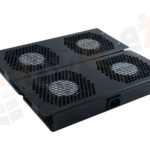 fan units
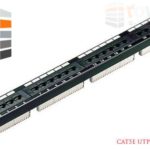 PATCH PANEL
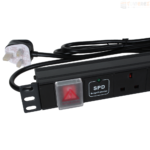 Power Distribution Unit
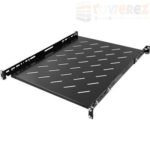 SHELVES
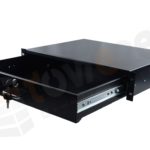 RACK DRAWER
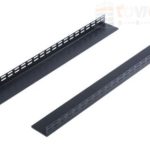 TOWEREZ RAILS
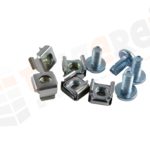 CAGE & NUTS

How Much Power Does a Server Cabinet Need? UK Guide to PDUs, 13A Circuits and Load Planning


Short answer: A small UK server cabinet may operate from one dedicated 13A supply, but the correct capacity depends on the equipment load, PSU ratings, redundancy, future growth and the number of independent feeds required. At 230V, a 13A circuit has a theoretical capacity of about 3kVA, although cabinets should be planned with sensible operating headroom rather than loaded continuously to the limit.
Understanding server cabinet power requirements UK installations is essential before buying a rack, installing PDUs or asking an electrician to provide new circuits. A reliable design must account for real consumption, startup current, power factor, cooling, maintenance bypasses and the way dual-power-supply equipment is connected.
What determines a server cabinet’s power requirement?
The cabinet itself consumes little power. The main demand comes from the servers, storage arrays, network switches, security appliances, UPS equipment and other devices installed inside it. The power requirement is therefore a property of the complete rack rather than its physical size.
Start with the equipment manufacturers’ specifications, but do not rely only on the maximum wattage printed on a PSU. A server with two 800W power supplies does not necessarily consume 1,600W during normal operation. The PSU rating is the maximum output capability, while the actual input demand varies with processors, memory, drives, fans and workload.
For an initial estimate, list every device and record:
- Typical running watts, where available
- Maximum or nameplate watts
- Input voltage and current
- Number of power supplies
- Whether the device needs a single feed or separate A and B feeds
- Expected expansion over the next few years
Use measured values from an intelligent PDU or a suitable power meter where possible. Measurement is particularly valuable for an existing cabinet because it reflects real workloads rather than theoretical specifications.
How to calculate server rack power in the UK
A basic electrical estimate uses:
Power in watts = voltage × current × power factor
For a simple resistive load, 230V multiplied by 13A equals approximately 2,990VA. IT equipment is not a purely resistive load, so watts, volt-amperes and power factor should not be treated as interchangeable. Modern power supplies usually include power-factor correction, but the manufacturer’s data remains the best reference.
For a cabinet with several devices, add the expected operating load and then apply a design allowance. The allowance should cover measurement uncertainty, higher future workloads, additional hardware and the need to avoid running a circuit continuously at its absolute limit. There is no single UK percentage that suits every installation, so the final design should be checked by a competent electrical professional against the equipment and installation conditions.
Example load calculation
Imagine a cabinet containing two servers at 450W each, a storage appliance at 350W, two network switches at 90W each and miscellaneous equipment at 100W:
- Servers: 900W
- Storage: 350W
- Network switches: 180W
- Other equipment: 100W
- Estimated operating load: 1,530W
A 1,530W operating load is below the nominal capacity of a 13A, 230V supply. However, the design still needs to consider startup behaviour, UPS losses, future equipment, the PDU rating and whether the cabinet requires two independent supplies. If two feeds are required, each feed must be assessed separately according to the manufacturer’s wiring and redundancy guidance.
What can a UK 13A circuit supply?
A standard UK 13A socket supply at approximately 230V offers a theoretical maximum of around 2,990VA. That figure should not automatically be treated as a recommended continuous IT load. A circuit may also supply other equipment, cables may have installation-specific limitations, and a plug, connector, PDU or UPS can have a lower rating than the protective device.
For a server cabinet, a dedicated circuit is normally preferable to sharing a socket circuit with printers, lighting, heaters or general office equipment. Dedicated supplies make the load easier to monitor and reduce the risk that an unrelated appliance trips the protective device.
Do not assume that replacing a 13A plug or changing a circuit breaker creates more capacity. The cable size, circuit design, accessories, distribution board, protective device and installation method must all support the proposed load. Any new circuit, alteration or fixed electrical work should be designed and tested by a suitably qualified UK electrician in accordance with the applicable requirements of BS 7671.
Choosing the right PDU for a server cabinet
A power distribution unit, or PDU, distributes mains power to equipment inside the rack. It is not a substitute for a correctly designed circuit, and its rating must be compatible with the supply and connected devices.
Basic PDUs
A basic PDU provides outlets and may include a circuit breaker, switch or overload protection. It is suitable where the main requirement is orderly distribution of power. Check the total current rating, input connector, outlet types and cable length before purchase.
Metered PDUs
A metered PDU displays current, voltage, power or energy values. This helps identify the actual cabinet load and makes it easier to detect unexpected increases. Local displays are useful during installation, while network-connected monitoring can support remote alerts and capacity planning.
Switched and intelligent PDUs
Switched PDUs can remotely control individual outlets or outlet groups. Intelligent models may offer outlet-level metering, environmental sensors, user permissions and alerting. These features are useful for remote sites and for controlled rebooting, but they add cost and configuration requirements.
| PDU type | Best suited to | Typical benefit |
|---|---|---|
| Basic | Small, stable cabinets | Simple and economical distribution |
| Metered | Capacity monitoring | Visibility of current and power use |
| Switched | Remote or managed environments | Outlet control and remote rebooting |
| Intelligent | Critical or growing infrastructure | Monitoring, alerts and detailed reporting |
13A, 16A and higher-capacity rack power supplies
Many smaller UK cabinets use PDUs with a 13A plug and BS 1363 socket outlets. Larger or denser installations may use 16A IEC connectors, commando-style connections or dedicated higher-capacity supplies. The connector and circuit must be selected as one system: a PDU with a high current rating cannot safely deliver that rating when connected to a lower-rated supply.
Higher-capacity supplies may be appropriate for dense compute, large storage systems, multiple UPS units or cabinets with significant growth plans. They may also require different distribution-board equipment, isolation arrangements and installation procedures. Ask the electrical contractor to confirm the proposed circuit rating, PDU input, protective device, earthing and testing requirements.
Single-feed versus A and B power
Equipment with two power supplies is often designed for resilience. One PSU can connect to an A-feed PDU and the other to a B-feed PDU. The two feeds should be independently protected and, where appropriate, supplied from separate UPS systems or electrical paths.
Redundant power supplies do not automatically halve the cabinet’s power requirement. Under normal conditions, both feeds may carry part of the load, depending on the equipment design. During a failed-feed condition, the surviving path may need to carry the full load. Size each path for the relevant failure scenario, not only for normal operation.
Check the server manufacturer’s instructions because some equipment has minimum input requirements, balanced-load recommendations or restrictions on mixing supply types. A dual-cord device connected to two sockets on the same PDU may have outlet redundancy but not genuine upstream resilience.
UPS sizing and battery runtime
An uninterruptible power supply protects equipment from interruptions, voltage disturbances and short outages. Its capacity is normally expressed in VA and watts, and both values matter. The UPS must support the real load while retaining enough capacity for startup behaviour, future additions and safe operation.
Battery runtime depends on the UPS model, load, battery condition, ambient temperature and whether extra battery packs are installed. A larger VA rating does not necessarily provide longer runtime. Define the required outcome first: graceful shutdown, a short ride-through period, generator transfer or extended autonomy.
UPS efficiency also creates heat and adds a small amount of load. Include the UPS input demand and any bypass equipment when assessing the supply. Keep batteries and UPS units within the manufacturer’s environmental limits and provide suitable ventilation.
Power, heat and cooling in a server cabinet
Almost all electrical power consumed by IT equipment eventually becomes heat. As a practical planning rule, a cabinet drawing 2kW will produce approximately 2kW of heat, excluding any additional losses from UPS equipment or other devices.
This heat must be removed from the room or enclosure. Check the room’s air-conditioning capacity, airflow direction, blanking panels, hot-aisle and cold-aisle arrangement, and the effect of placing a high-density cabinet beside lower-load racks. Overheating can cause throttling, hardware faults and shortened component life even when the electrical supply is adequate.
Common mistakes when planning UK server cabinet power
- Adding PSU labels instead of measuring demand: Maximum PSU ratings can significantly overstate normal consumption.
- Filling a 13A supply to its theoretical limit: Leave practical headroom and account for startup and future loads.
- Sharing with office equipment: Heaters, kettles and other appliances can create nuisance trips.
- Ignoring the PDU input connector: The lowest-rated component determines the usable capacity.
- Assuming dual PSUs provide full resilience: Resilience depends on separate upstream paths as well as two cords.
- Forgetting UPS and cooling losses: Supporting infrastructure also consumes power and produces heat.
- Planning only for today: Empty rack space does not guarantee spare electrical capacity.
Practical checklist for server cabinet power planning
- Inventory every device planned for the cabinet.
- Record typical and maximum input values from reliable manufacturer data.
- Measure the existing load where the cabinet is already operational.
- Calculate normal and failure-mode demand for A and B feeds.
- Select PDU types, outlet formats and input connectors that match the equipment.
- Allow capacity for growth without treating the allowance as available day-one load.
- Confirm UPS VA, wattage and required battery runtime.
- Check ventilation, cooling and environmental monitoring.
- Have electrical work designed, installed and tested by a competent professional.
- Label circuits, PDUs and equipment so maintenance staff can identify each power path.
Key takeaways
- A 13A UK supply has a theoretical capacity of about 2,990VA at 230V, but the practical design load should be lower and installation-specific.
- Use measured consumption and manufacturer data rather than adding PSU nameplate ratings alone.
- Choose PDUs based on total current, connector type, monitoring needs and redundancy requirements.
- Dual power supplies require properly separated A and B paths if resilience is the objective.
- Electrical capacity and cooling capacity must be planned together because IT power becomes heat.
FAQs about server cabinet power requirements UK
How much power does a typical server cabinet need?
There is no single typical value. A small network cabinet may use a few hundred watts, while a cabinet with multiple servers and storage can require several kilowatts. Calculate the total from the installed equipment, then add appropriate headroom for growth and failure conditions.
Can a server cabinet run from a 13A UK socket?
It can if the calculated load, startup behaviour, PDU rating and installation design are suitable. A 13A supply at 230V has a theoretical capacity of about 2,990VA, but it should not be loaded to that limit without professional assessment and adequate operating margin.
Do two server power supplies require two circuits?
Not always, but two circuits or separate upstream paths are normally needed if the objective is protection from a circuit or PDU failure. Connecting both cords to the same upstream source does not provide full electrical resilience.
What size PDU should I use for a server rack?
Choose a PDU whose input rating, connector and outlet capacity are compatible with the supply and the expected load. Size it for normal demand, growth and relevant failure scenarios, rather than only for the number of available sockets.
Does server cabinet power consumption affect cooling?
Yes. Electrical power consumed by IT equipment is converted largely into heat. A cabinet drawing approximately 2kW therefore produces roughly 2kW of heat, before additional losses from UPS and power-distribution equipment are considered.
{“@context”:”https://schema.org”,”@type”:”FAQPage”,”mainEntity”:[{“@type”:”Question”,”name”:”How much power does a typical server cabinet need?”,”acceptedAnswer”:{“@type”:”Answer”,”text”:”There is no single typical value. A small network cabinet may use a few hundred watts, while a cabinet with multiple servers and storage can require several kilowatts. Calculate the total from the installed equipment, then add appropriate headroom for growth and failure conditions.”}},{“@type”:”Question”,”name”:”Can a server cabinet run from a 13A UK socket?”,”acceptedAnswer”:{“@type”:”Answer”,”text”:”It can if the calculated load, startup behaviour, PDU rating and installation design are suitable. A 13A supply at 230V has a theoretical capacity of about 2,990VA, but it should not be loaded to that limit without professional assessment and adequate operating margin.”}},{“@type”:”Question”,”name”:”Do two server power supplies require two circuits?”,”acceptedAnswer”:{“@type”:”Answer”,”text”:”Not always, but two circuits or separate upstream paths are normally needed if the objective is protection from a circuit or PDU failure. Connecting both cords to the same upstream source does not provide full electrical resilience.”}},{“@type”:”Question”,”name”:”What size PDU should I use for a server rack?”,”acceptedAnswer”:{“@type”:”Answer”,”text”:”Choose a PDU whose input rating, connector and outlet capacity are compatible with the supply and the expected load. Size it for normal demand, growth and relevant failure scenarios, rather than only for the number of available sockets.”}},{“@type”:”Question”,”name”:”Does server cabinet power consumption affect cooling?”,”acceptedAnswer”:{“@type”:”Answer”,”text”:”Yes. Electrical power consumed by IT equipment is converted largely into heat. A cabinet drawing approximately 2kW therefore produces roughly 2kW of heat, before additional losses from UPS and power-distribution equipment are considered.”}}]}