
 FREE STANDING CABINETS
 WALL MOUNTED CABINETS
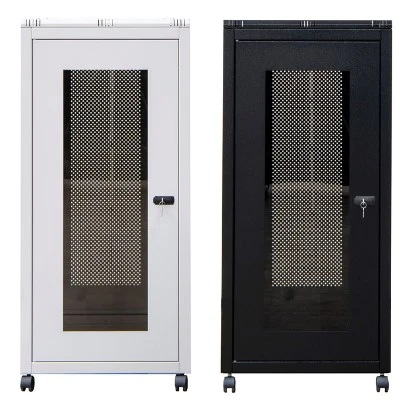

 Blanking panel
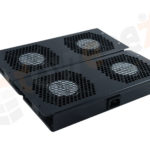 fan units
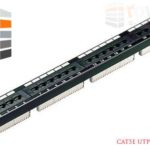 PATCH PANEL
 Power Distribution Unit
 SHELVES
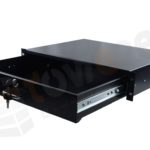 RACK DRAWER
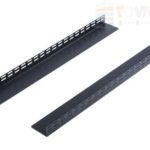 TOWEREZ RAILS
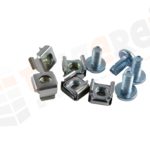 CAGE & NUTS

How Many Amps Does a Server Rack Need in the UK? A Power Planning Guide


There is no single amp rating for every server rack. In the UK, calculate the rack’s total real power in watts, divide by the supply voltage, and then allow capacity for startup demand, future equipment and safe operating headroom. At a nominal 230V, a 5kW rack draws approximately 21.7A, while a 10kW rack draws approximately 43.5A. The correct supply may therefore be a 13A, 16A, 32A or higher dedicated circuit, depending on the equipment, PDU design and resilience requirements.
Understanding server rack power requirements UK is essential before ordering cabinets, PDUs, cabling or cooling. Under-sizing a supply can cause nuisance trips and unexpected shutdowns; over-sizing without a coordinated design can increase installation cost and leave power infrastructure poorly matched to the actual load.
How to calculate server rack power requirements UK
The basic current calculation is:
Current (A) = Real power (W) ÷ Voltage (V)
For a single-phase UK supply, 230V is the usual nominal voltage used for planning. For example, a rack with a measured load of 3,000W requires:
3,000W ÷ 230V = 13.0A
This calculation is a starting point rather than a complete electrical design. The nameplate rating of a server is often higher than its normal operating consumption, while a measured reading may represent only one point in time. Your design should consider the maximum expected load, power factor, inrush current, circuit characteristics, PDU limits and the need for spare capacity.
Watts, volt-amperes and power factor
Modern IT equipment normally uses switched-mode power supplies, which can have a power factor below or close to unity. Where the manufacturer provides both watts and VA, use the VA figure when checking the current capacity of a UPS, PDU or circuit:
Apparent power (VA) = Voltage (V) × Current (A)
Power factor = Real power (W) ÷ Apparent power (VA)
If a device uses 2,300W at 230V, its idealised current is 10A. However, if its apparent power is 2,500VA, the equipment and upstream power system must be assessed against that VA load as well as its wattage. Manufacturer data and measurements from a power meter are preferable to assumptions.
Typical UK server rack power scenarios
The following examples show how the calculation works. They are planning illustrations, not universal rack specifications.
| Rack load | Approximate current at 230V | Planning observation |
|---|---|---|
| 1,500W | 6.5A | May suit a small, lightly loaded cabinet if the circuit and PDU are correctly specified. |
| 3,000W | 13.0A | Already close to the nominal current of a 13A connection before adding design headroom. |
| 5,000W | 21.7A | Often points towards a higher-rated dedicated supply rather than a standard 13A plug. |
| 10,000W | 43.5A | Usually requires substantial dedicated infrastructure and careful distribution planning. |
These values assume a single-phase 230V supply and a power factor close enough to unity for a simple illustration. Actual current can differ. Do not select a breaker or cable solely from the table: an electrical designer must assess installation method, cable capacity, protective devices, fault protection, voltage drop and applicable requirements.
What affects the amps a server rack needs?
IT equipment density
A cabinet containing a few low-power network switches may draw far less than a cabinet filled with high-density compute, storage, GPU servers or telecoms equipment. Count every powered device, including servers, switches, routers, storage arrays, security appliances, KVM equipment and rack-mounted accessories.
Do not forget equipment that is sometimes omitted from early estimates. Console servers, monitoring devices, media converters, optical systems and small displays all contribute to the load. If a rack contains a UPS, assess its efficiency and charging behaviour as part of the wider design rather than simply adding its full nameplate rating to the IT load.
Normal, maximum and future load
Normal operating load is useful for estimating energy use and cooling, but the supply must also tolerate the highest credible demand. Server power can change when processors become busy, disks are active or redundant power supplies restart. Some devices also draw a short inrush current when energised.
Record three figures where possible:
- Present measured load: what the rack consumes during typical operation.
- Expected peak load: the highest credible demand from the installed equipment.
- Planned capacity: the additional load expected from growth, replacement hardware or changed workloads.
Designing only for today’s average reading can create a problem when the rack is expanded. Conversely, using every nameplate maximum without checking real equipment behaviour can result in an unnecessarily expensive and inefficient installation. Use manufacturer specifications, commissioning measurements and a documented growth assumption.
Single-cord and dual-cord equipment
Many servers have two power supply units so that they can connect to separate A and B power paths. In a resilient design, one feed should be capable of supporting the equipment load if the other feed is unavailable, subject to the equipment manufacturer’s requirements and the facility’s operating policy.
This does not necessarily mean each PDU carries the entire combined nameplate load continuously. It means the failure scenario must be modelled correctly. If every device is single-corded, two PDUs alone do not create power redundancy; the device still needs a suitable transfer arrangement or another approved method of connection.
Choosing a PDU and UK power connection
A rack PDU distributes power within the cabinet, but its rating must be coordinated with the upstream circuit, plug or connector, and the devices connected to it. Check the PDU’s maximum current, voltage range, outlet types, number of outlets, monitoring features and derating instructions.
13A connections
A standard UK 13A plug is common for small IT installations and individual devices. It should not automatically be treated as a suitable way to power a fully populated rack. A rack drawing close to 13A has little practical margin for load variation, additional equipment or fault conditions. Continuous-load planning and the manufacturer’s instructions should be considered by a competent electrical professional.
16A, 32A and higher-rated supplies
Higher-density cabinets may use IEC connectors and dedicated circuits rated above 13A. The appropriate option depends on the calculated demand, the required connector type, cable installation, protective device and site distribution board. A 32A feed is not a guarantee that a rack can safely consume 32A continuously; the PDU, connector, circuit design and operating limits still apply.
For larger deployments, multiple single-phase feeds or a three-phase arrangement may improve distribution across a row or room. Three-phase systems require a different calculation and careful phase balancing. They should be designed, installed and tested by an appropriately qualified electrical contractor.
Allowing headroom and designing for resilience
Power planning should include operational headroom. The exact allowance is a design decision, not a universal percentage that can be applied to every installation. Consider:
- the difference between average and peak IT demand;
- startup and inrush behaviour;
- future servers and network equipment;
- the usable capacity of the PDU and upstream circuit;
- UPS runtime and recharge requirements;
- planned maintenance and equipment replacement; and
- the consequences of losing one supply path.
For critical systems, document whether resilience is based on separate utility circuits, UPS outputs, generators, A and B PDUs, or a combination. The most robust design is not simply the one with the largest breaker. It is one where the complete chain—from building supply to rack inlet and device power supply—has been checked for capacity, selectivity and failure modes.
Planning principle: size the system for the maximum credible operating condition and the required failure scenario, then verify the finished installation with measurements and test records.
Measuring real server rack consumption
Where an existing installation is available, use metering instead of relying only on equipment labels. Intelligent PDUs can report volts, amps, watts, VA, power factor and sometimes energy consumption. A suitable portable power analyser can also help during commissioning, provided it is used by a competent person and connected safely.
Take readings during representative conditions, including busy processing periods and any planned startup sequence. Capture each feed separately in an A and B arrangement. If one power supply is disconnected for a resilience test, follow the approved change procedure and confirm that the remaining path can carry the resulting load.
Keep a simple power schedule containing the device name, quantity, rated input, measured watts, measured VA, outlet, PDU, circuit and expected growth. This makes future moves and adds easier to review and helps prevent accidental overloading.
Cooling and power are linked
Almost all electrical power consumed by IT equipment becomes heat that must be removed. A rack designed for a higher electrical load therefore needs suitable airflow, room cooling and possibly a high-density cooling solution. Power planning that ignores heat rejection can produce a cabinet that has enough sockets but cannot operate reliably at its intended load.
Check front-to-back airflow, blanking panels, hot-aisle or cold-aisle arrangements, cabinet placement and the cooling capacity available to the room. UPS losses, PDU losses and other electrical infrastructure also add heat. Coordinate the electrical and mechanical designs rather than treating them as separate projects.
Common mistakes in UK rack power planning
- Adding server nameplate values without context: a nameplate may describe a maximum input rather than typical consumption, but it still matters for worst-case design.
- Using average load as the circuit size: average watts do not account for peaks, inrush or future growth.
- Ignoring the weakest component: the plug, socket, connector, PDU, circuit, UPS or cable may impose the limiting rating.
- Assuming two PDUs automatically provide resilience: the upstream paths and device connections must also be independent and correctly configured.
- Forgetting phase balance: multi-phase installations need loads distributed appropriately across phases.
- Neglecting cooling: additional power capacity without additional heat-removal capacity does not create usable IT capacity.
- Making electrical changes without approval: UK fixed wiring and protective equipment should be designed, installed and verified by competent professionals in line with applicable regulations and site procedures.
A practical checklist for server rack power planning
- List every device planned for the cabinet.
- Record manufacturer watt and VA data where available.
- Measure an existing rack during normal and peak conditions.
- Calculate current at the actual supply voltage.
- Allow for startup behaviour, growth and the required failure scenario.
- Select compatible PDUs, connectors, circuits and UPS equipment.
- Check cable routes, protection, voltage drop and phase balance.
- Confirm that the cooling system can remove the resulting heat.
- Have the electrical design reviewed and installed by a qualified professional.
- Commission the rack, record readings and label every feed.
Key takeaways
- There is no standard amp requirement for every UK server rack.
- Use watts divided by 230V for a simple single-phase estimate, then verify VA and power factor.
- A 3kW load is about 13A at 230V, while a 5kW load is about 21.7A.
- Choose the circuit and PDU from the maximum credible load, not only the average reading.
- Plan A and B feeds around the actual failure scenario and device capability.
- Coordinate electrical capacity with cooling, UPS performance and future expansion.
Frequently asked questions
How many amps does a typical UK server rack need?
It depends on the equipment density and resilience model. A small network rack may draw only a few amps, while a high-density compute rack may require tens of amps. Calculate the total load in watts, divide by the nominal supply voltage, and then add appropriate design capacity.
Can a server rack run from a UK 13A socket?
Yes, a small rack or individual low-power equipment may be suitable for a 13A connection when the total load, PDU, plug, circuit and operating conditions have been checked. A rack that approaches 13A should not be treated as having comfortable spare capacity without a formal review.
What is the current for a 5kW server rack at 230V?
A 5kW load at 230V is approximately 21.7A using the basic single-phase formula. The final supply design must also consider VA, power factor, inrush, protective devices, cable installation and required headroom.
Do I need two power feeds for a server rack?
Two feeds may be appropriate for equipment with dual power supplies and a requirement for maintenance or fault tolerance. They only provide meaningful resilience when the upstream circuits, PDUs and device connections are designed as genuinely separate power paths.
Does a higher-rated PDU increase the available server power?
No. A higher-rated PDU can distribute more current only when the upstream circuit, connector, cabling, UPS and facility supply are also rated and designed for that load. The lowest-rated component remains a practical limit.
Who should approve a UK server rack power installation?
A competent electrical designer or contractor should review fixed wiring, protective devices, cable sizing, earthing, testing and compliance with applicable UK requirements. IT staff can provide the equipment load and resilience objectives, but should not substitute those figures for an electrical design assessment.
{“@context”:”https://schema.org”,”@type”:”FAQPage”,”mainEntity”:[{“@type”:”Question”,”name”:”How many amps does a typical UK server rack need?”,”acceptedAnswer”:{“@type”:”Answer”,”text”:”It depends on the equipment density and resilience model. A small network rack may draw only a few amps, while a high-density compute rack may require tens of amps. Calculate the total load in watts, divide by the nominal supply voltage, and then add appropriate design capacity.”}},{“@type”:”Question”,”name”:”Can a server rack run from a UK 13A socket?”,”acceptedAnswer”:{“@type”:”Answer”,”text”:”Yes, a small rack or individual low-power equipment may be suitable for a 13A connection when the total load, PDU, plug, circuit and operating conditions have been checked. A rack that approaches 13A should not be treated as having comfortable spare capacity without a formal review.”}},{“@type”:”Question”,”name”:”What is the current for a 5kW server rack at 230V?”,”acceptedAnswer”:{“@type”:”Answer”,”text”:”A 5kW load at 230V is approximately 21.7A using the basic single-phase formula. The final supply design must also consider VA, power factor, inrush, protective devices, cable installation and required headroom.”}},{“@type”:”Question”,”name”:”Do I need two power feeds for a server rack?”,”acceptedAnswer”:{“@type”:”Answer”,”text”:”Two feeds may be appropriate for equipment with dual power supplies and a requirement for maintenance or fault tolerance. They only provide meaningful resilience when the upstream circuits, PDUs and device connections are designed as genuinely separate power paths.”}},{“@type”:”Question”,”name”:”Does a higher-rated PDU increase the available server power?”,”acceptedAnswer”:{“@type”:”Answer”,”text”:”No. A higher-rated PDU can distribute more current only when the upstream circuit, connector, cabling, UPS and facility supply are also rated and designed for that load. The lowest-rated component remains a practical limit.”}},{“@type”:”Question”,”name”:”Who should approve a UK server rack power installation?”,”acceptedAnswer”:{“@type”:”Answer”,”text”:”A competent electrical designer or contractor should review fixed wiring, protective devices, cable sizing, earthing, testing and compliance with applicable UK requirements. IT staff can provide the equipment load and resilience objectives, but should not substitute those figures for an electrical design assessment.”}}]}